Agencies are losing Shopify projects they should be winning. Not because they lack the client relationships or the pitch but because they do not have the development capacity to deliver. With Shopify now powering over 4.6 million active stores globally (Source: Shopify, 2024 Annual Report), client demand for Shopify work is only going in one …

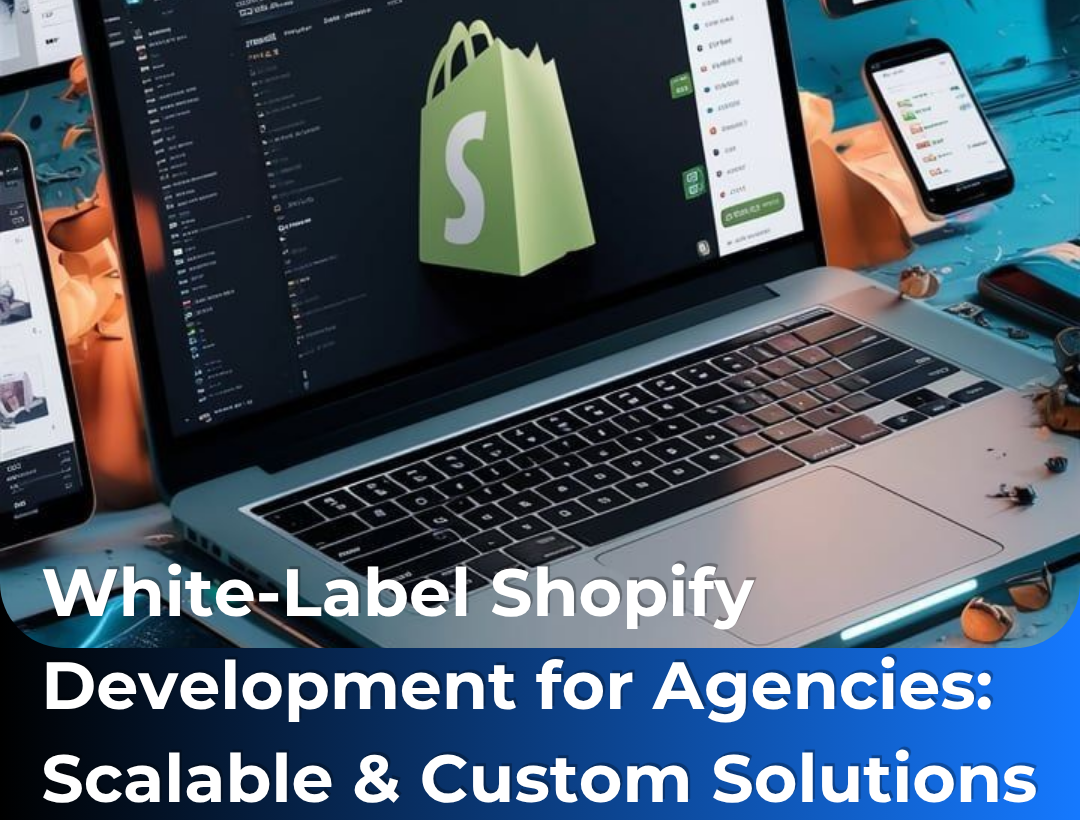
Agencies are losing Shopify projects they should be winning. Not because they lack the client relationships or the pitch but because they do not have the development capacity to deliver. With Shopify now powering over 4.6 million active stores globally (Source: Shopify, 2024 Annual Report), client demand for Shopify work is only going in one direction. Hiring a full-time developer is slow, expensive, and risky when project volume fluctuates. Freelancers are unpredictable. And turning down a client’s Shopify request hands that revenue directly to a competitor.
This guide covers what white-label Shopify development actually is, how it works operationally, what a good partner delivers, and how to evaluate and choose one before you sign anything. If you are an agency owner who wants to add Shopify delivery to your offering without building an in-house dev team, this is written for you.
What Is White-Label Shopify Development
White-label Shopify development is where a specialist development team builds and delivers Shopify stores on your behalf entirely under your agency’s name. Your client never meets the developers. They see your agency as the team that built their store.
Unlike subcontracting, the partner stays invisible. They sign an NDA (a contract preventing them from contacting your clients or revealing their involvement) before a single line of code is written. No NDA, no brief that is the rule most agencies learn too late.
How white-label compares to your other delivery options:
| Model | Cost | Speed | Risk | Scalability |
| White-Label Partner | Variable — per project or retainer only | Fast — Shopify specialists | Low — NDA protects client confidentiality | High — add capacity without hiring |
| In-House Developer | High — salary, benefits, training | Slow — ramp-up and management overhead | Medium — depends on retention | Low — capped by team size |
| Freelancer | Medium — hourly rates vary | Inconsistent — availability not guaranteed | High — no NDA standard | Low — one person, one project |
Why Shopify Is the Right Platform for White-Label Delivery
Shopify is the foundation this model works best on and that is not a coincidence. The platform’s structure actively supports agency delivery. Shopify powers over 10% of all US ecommerce and hosts more than 4.6 million active online stores globally (Source: Shopify, 2024 Annual Report). That scale means consistent, sustained client demand across every agency vertical.
The Partner Program gives certified developers verified access to Shopify’s tools and support so when you work with a certified white-label Shopify partner, you are not gambling on a random freelancer. Shopify has already vetted them.
The technical side also works in your favor. Liquid templates, 8,000+ apps (Source: Shopify App Store, 2024), Hydrogen for headless builds, and Shopify Plus configurations all follow documented standards which means consistent, repeatable delivery regardless of project size.
Benefits of White-Label Shopify Development for Agencies
Switching to a white-label model changes your agency’s economics and delivery capacity at the same time. Here is what it actually gives you:
• Lower delivery cost. You pay for development only when you have projects to bill no developer salary, benefits, or equipment year-round. In-house Shopify developers in the US cost $85,000–$120,000 in base salary alone before overhead.
• Faster time to market. A white-label partner with a dedicated Shopify team can start within days of receiving a brief. Hiring and onboarding an in-house developer takes weeks or months.
• Genuine Shopify specialization. Custom Liquid theme work, Shopify Plus configurations, and Hydrogen builds each require deep platform knowledge. A white-label partner whose entire practice is Shopify will outperform a generalist developer every time.
• Capacity to take on larger projects. Without an in-house team, your agency ceiling is whatever one or two people can handle. A white-label partner with multiple developers removes that ceiling entirely.
• Ability to say yes instead of referring out. An agency that turns down a client’s Shopify request does not get credit for honesty it loses the client. White-label development lets you win those projects and keep the relationship.
• Protected margins. You control the client-facing price. The white-label cost is your variable input. That spread, managed correctly, is your margin.
Why Are Agencies Choosing White-Label Shopify Development in 2026?
Three converging pressures are pushing agencies toward white-label Shopify partnerships and all three are getting stronger.
Developer costs are rising. The average Shopify developer salary in the US reached $95,000–$115,000 in 2024 (Source: Glassdoor, 2024), with senior and Shopify Plus-experienced developers commanding more. Agencies trying to scale Shopify delivery without absorbing that cost are increasingly treating white-label partnerships as the structural answer, not a temporary workaround.
Client demand is accelerating. Global ecommerce sales reached $5.8 trillion in 2023 and are projected to grow to $8 trillion by 2027 (Source: Statista, 2024). Shopify sits at the center of that growth particularly for direct-to-consumer brands, B2B sellers moving online, and businesses migrating off legacy platforms. Every one of those transitions is a potential project for an agency with Shopify delivery capacity.
Margin pressure is real. Agencies are being squeezed between rising talent costs and clients expecting faster delivery at flat rates. White-label partnerships solve both sides at once: lower delivery cost and faster turnaround. The agencies that move first on this are the ones growing while the others wonder where their Shopify work went.
What a White-Label Shopify Development Partner Actually Delivers
Most white-label providers list their services as a set of bullet points. That is not enough information to know whether a partner can actually deliver what your specific client needs. Here is what quality white-label Shopify delivery looks like, service by service.
Custom Theme Development
Custom theme development what some call white label Shopify design means building a Shopify storefront from the ground up to match a client’s brand identity: typography, color systems, layout logic, and interactive elements, without relying on a purchased theme as the base. The deliverable is a fully branded, production-ready Shopify theme that your agency presents to the client as your own work. Agencies need this when a client’s brand is too specific for off-the-shelf themes, or when conversion requirements demand custom UX logic.
Shopify App Integration
Shopify has over 8,000 apps covering everything from inventory management to subscription billing to loyalty programs. App integration is not just installing an app it means configuring it correctly within the store’s architecture, ensuring it does not conflict with other installed apps, and testing it against the store’s specific workflows. A white label Shopify agency handles this as part of the broader store build or as a standalone service when a client needs a specific integration added to an existing store.
Shopify Plus Development
Shopify Plus is Shopify’s enterprise tier, designed for businesses processing high order volumes or requiring advanced customization custom checkout experiences, B2B wholesale portals, multi-currency setups, and automation via Shopify Flow. Not every white-label developer has Plus experience. Shopify Plus development requires familiarity with Launchpad, Scripts Editor, and the more permissive API access Plus accounts receive. Agencies working with larger ecommerce clients should specifically confirm Plus experience before signing a partner.
Headless Shopify Development (Hydrogen Framework)
Headless Shopify separates the storefront presentation layer from Shopify’s backend, using Shopify’s Hydrogen framework [React-based front-end framework built specifically for Shopify] to build custom storefronts that interact with Shopify via API. Agencies need this for clients who require extremely fast page performance, complex custom UI experiences, or integration with non-standard front-end systems. Headless builds are more complex and more expensive — ensure your white-label partner has genuine Hydrogen experience, not just theoretical familiarity.
WooCommerce-to-Shopify Migration
Store migration is one of the most operationally risky Shopify services an agency can offer and one of the most in-demand. A migration project involves transferring product data, customer records, order history, and URL structures from WooCommerce (or Magento, BigCommerce, or custom platforms) to Shopify while preserving SEO equity and minimizing downtime. A competent white-label partner will provide a migration checklist, a staging environment for QA, and a rollback plan before going live.
Performance Optimization
Shopify stores slow down over time as apps accumulate, themes become bloated, and image libraries grow. Performance optimization work involves auditing load speed (targeting under three seconds), compressing images, removing unused scripts, restructuring Liquid templates, and improving mobile responsiveness. Many white-label partners now extend this offering to include Shopify CRO (conversion rate optimization) audits and AI-powered personalization tools that adapt product recommendations to individual shopper behavior, two areas where ecommerce brands are increasingly investing. This service is often delivered as a standalone engagement or as part of a post-launch support retainer.
Ongoing Maintenance and Support Retainers
Most white-label partners offer monthly retainer arrangements for ongoing Shopify maintenance software updates, app compatibility checks, minor design updates, performance monitoring, and bug fixes. For agencies, retainers are the most financially predictable part of a white-label relationship because they generate recurring revenue from existing clients without new project acquisition costs.
How the White-Label Shopify Development Process Works
What a partner delivers matters. How the delivery actually runs is what separates a smooth engagement from a painful one. Here is the full workflow, stage by stage.
Stage 1: Brief and Scope
- Your agency sends a brief covering brand assets, functional requirements, integrations, and timeline
- The partner returns a scope document outlining what they will build, what is out of scope, and revision terms
- The more specific your brief, the less back-and-forth later
Stage 2: Development and Check-ins
- Work begins once the NDA is signed and scope is locked
- Reliable partners send weekly updates via Slack, Asana, or email without being chased
- If you are chasing updates in week one, that is your answer about this partner
Stage 3: Staging and QA
- Partner delivers a password-protected staging link with a QA checklist
- Checklist covers responsive design, load speed, app functionality, and checkout flow
- Your agency reviews it before the client ever sees it that review is your quality gate, do not skip it
Stage 4: Revisions
- One to two rounds of consolidated changes is standard
- Anything outside the original brief is a formal change order, not a favour
- Agencies that do not enforce this boundary absorb costs that quietly kill their margins
Stage 5: Client Handoff
- The store goes to your client entirely under your branding
- The partner’s name appears nowhere not in staging URLs, not in admin emails, not in documentation
- Your agency gets full credit
Typical Turnaround: Custom theme: 3–6 weeks. App integration: 1–2 weeks. Migration with QA: 4–8 weeks. Headless/Hydrogen: 8–16 weeks. Anyone promising faster without explaining how is cutting corners somewhere.
How to Choose the Right White-Label Shopify Development Partner
Most agencies make their first white-label partnership decision based on price and an impressive-looking portfolio. That is the wrong framework. Price tells you nothing about reliability, communication quality, or how a partner behaves when a project goes off-track. Here is the framework that actually matters.
Shopify Partner Certification. Certification through Shopify’s Partner Program is the baseline. It is not a guarantee of quality, but its absence is a disqualifying signal. Certified partners have access to Shopify’s development sandbox accounts, support resources, and official documentation all of which affect the quality and reliability of the work they produce.
Relevant Portfolio Depth. A portfolio of thirty generic product stores is not the same as proven experience in your clients’ specific verticals. Ask for case studies not just screenshots. A case study should explain the problem, the solution, the technical approach, and the outcome. If a partner cannot articulate those four elements for at least three recent projects, they are showing you design work, not delivery capability.
NDA Policy. This should be offered proactively, not requested reluctantly. A white-label partner that treats the NDA as an inconvenience rather than a standard operating procedure is not structured for white-label delivery. It means your client confidentiality depends on goodwill, not legal protection.
Communication and PM Tool Compatibility. You have your own workflows. A partner that can only communicate through a proprietary portal or requires you to log into their project management system adds friction to every project. Confirm before signing that they work within tools your agency already uses Slack, Asana, Monday, Basecamp, or plain email.
Before you sign anything, run through this checklist:
| # | Question to Ask Before You Sign |
| 1 | Are you a certified Shopify Partner?Shopify Partner Program certification verifies legitimate access to Shopify tools, resources, and support. It is the baseline credibility check. |
| 2 | Do you sign an NDA before work begins?This is non-negotiable. Without a signed NDA, there is no contractual barrier between your partner and your client. Do not proceed without it. |
| 3 | What is your standard turnaround time per project type?Get specifics: custom theme, app integration, full store build. Vague answers indicate no real SLA. You need commitments you can pass to clients. |
| 4 | How do you handle revisions and what is your revision policy?Unlimited revisions are a red flag no one offers truly unlimited anything profitably. Clarify the number of revision rounds and what counts as a revision versus a new scope item. |
| 5 | Can you show relevant Shopify work in my niche?A portfolio of generic stores is not reassuring. Ask for case studies in your clients’ verticals. A developer who built fashion stores is not automatically qualified for B2B Shopify Plus builds. |
| 6 | What pricing models do you offer and how is scope change billed?Understand retainer, per-project, and hourly options upfront. Ask how they handle scope changes so you can build a buffer into your client quotes. |
| 7 | What communication tools and project management systems do you use?Confirm Slack, Asana, or email compatibility before integrating them into your delivery chain. A partner who only uses a proprietary portal adds friction to every project. |
Pricing Models: How White-Label Shopify Development Is Structured
Almost no competitor in this space addresses pricing directly, which is exactly why agencies go into their first white-label partnership without a framework for understanding what they are paying for. The table below covers how pricing is typically structured and what to watch for in each model to protect your margins.
| Model | Best For | Typical Range | Key Consideration |
| Per-Project | Custom theme builds, migrations, one-off integrations | Fixed quote per scope | Define scope in writing upfront — every unscoped change erodes your margin |
| Monthly Retainer | Agencies with recurring Shopify workloads or ongoing support contracts | $1,500–$5,000/month (market range, not a fixed rate) | Gives you predictable costs and priority capacity; build the fee into your client billing |
| Hourly Rate | Smaller, undefined, or highly variable scopes | $40–$100/hr depending on location and seniority | Flexible but requires active management to prevent cost overruns |
| Hybrid | Mature partnerships with a mix of support and project work | Base retainer + per-project quotes layered on top | Most common in long-term agency relationships; balances predictability with flexibility |
| Margin Protection | All models | 30%–50% markup is typical | The markup matters less than a locked scope. Every unscoped change that goes unbilled is margin erosion. |
Common Mistakes Agencies Make with White-Label Shopify Development
Most of these mistakes happen in the first partnership, before an agency knows what to look for. Knowing them in advance saves you a difficult client conversation down the line.
Not signing an NDA before work begins. This is the most consequential mistake, and it is surprisingly common. Agencies assume a verbal agreement or a terms-of-service document is sufficient protection. It is not. A signed, project-specific NDA is the only contractual guarantee that your client’s identity and relationship are protected. Do not send a brief to any partner who has not signed one.
Choosing on price alone. The cheapest white-label quote is almost never the lowest true cost. A partner charging 30% below market rate is typically absorbing that difference through slower turnaround times, fewer revision rounds, or lower QA standards. When the client presentation fails or a bug goes live, your agency takes the reputational hit, not the partner. Price should be a factor but only after certification, portfolio, and communication quality are confirmed.
Sending incomplete briefs. A vague brief produces a vague result. Agencies that send two paragraphs and a mood board to their development partner and then expect a production-ready store are building in rework from the start. A proper brief includes approved brand assets, functional requirements, third-party integration details, reference stores, and timeline expectations. The clearer your input, the cleaner the output.
Skipping the QA stage. Presenting a client with a store your agency has not personally reviewed is a significant risk. Even excellent development partners make mistakes. Your agency’s review of the staging environment is the quality gate between the partner’s work and your client’s impression of your work. Remove that gate and you are outsourcing your quality control entirely.
Failing to set revision caps. Without a defined revision policy, ‘a couple of small changes’ can turn into twelve rounds of feedback with no additional billing. Define the number of revision rounds in the original scope agreement with your partner, and mirror that boundary in your client contract. Any revisions outside that scope should be quoted and billed separately — both to the client and by the partner to you.
Multi-Store Management: A Note for Growing Agencies
As your Shopify client base grows, managing parallel development workflows becomes an operational challenge in itself. A white-label partner structured for multi-store delivery keeps separate development environments per client, administers stores through your Shopify Partner account, and runs a project management system capable of tracking concurrent builds without confusion.
Before committing to a partner long-term, ask directly: how many concurrent client projects do you currently manage, and what does your internal QA process look like across simultaneous builds? A partner that breaks down at four concurrent projects becomes a growth ceiling, not a growth enabler. Evaluate capacity and internal systems with the same rigor you apply to technical capability.
Conclusion
White-label Shopify development gives agencies a structural answer to a real business problem: how to deliver high-quality Shopify work profitably without the cost and risk of building an in-house development team. The model works when the partner relationship is built on a proper NDA, a clear scope process, verified technical credentials, and communication standards that fit your workflow.
The agencies that get the most out of white-label Shopify partnerships are the ones that treat the partner selection decision with the same seriousness as a senior hire — because operationally, that is exactly what it is.
Ready to stop turning down Shopify projects? Book a free partnership consultation with 360 White Label Agency we build under your brand, your client never knows we exist, and you keep the margin.
FAQ: White-Label Shopify Development for Agencies
1. Is white-label Shopify development legal?
Yes. White-label development is a well-established commercial arrangement used across every professional services industry. There is nothing in Shopify’s Partner Program terms that prohibits delivering development work under a client agency’s brand. What matters legally is that you have a clear contract with both your white-label partner (covering NDA, scope, and deliverables) and your own client (covering deliverables and ownership of the completed work).
2. Will the development partner ever contact my client directly?
A legitimate white-label partner will not contact your client under any circumstances before, during, or after the project. This should be explicitly stated in your NDA and partnership agreement. If a partner cannot confirm this in writing, do not use them. The entire value of the white-label model depends on the development team remaining invisible to your client.
3. Do white-label partners work with Shopify Plus?
Not all of them. Shopify Plus development requires specific technical experience custom checkout extensions, Shopify Flow automation, B2B wholesale portals, and the more permissive API access that Plus accounts provide. Always confirm Plus capability explicitly and ask for case studies of actual Plus builds before assuming it is covered under general Shopify development.
What is the typical turnaround time?
Turnaround varies by project type. A custom Shopify theme takes three to six weeks depending on design complexity. App integrations run one to two weeks. A full WooCommerce-to-Shopify migration with QA typically takes four to eight weeks. Headless Hydrogen builds run eight to sixteen weeks for a production-quality result. Any partner quoting significantly faster than these ranges should be asked specifically how they achieve that speed without compromising QA.
4. Is ongoing support available after launch?
Yes, and it is one of the strongest reasons to formalize a white-label relationship rather than using one-off freelancers. A consistent white-label partner can provide monthly maintenance retainers covering app updates, performance monitoring, minor design changes, and bug fixes. This is how agencies build recurring revenue from Shopify clients without ongoing project acquisition.
5. Can I use my own project management tools?
You should be able to. A white-label partner set up for agency delivery should be able to work within your existing workflows Slack for communication, Asana or Monday for project tracking, email for formal documentation. If a partner insists you log into their proprietary system for everything, factor that friction into your evaluation. It is a signal that their process is built around their convenience, not yours.
What happens if the project does not meet the agreed scope?
Your partnership agreement should define acceptance criteria, the revision process, and what counts as a scope change versus a deliverable defect. If the work does not meet spec, the partner fixes it within the agreed revision rounds at no extra cost. Anything beyond that requires escalation which is exactly why you need a signed contract, not just a conversation, before any work begins.