Sounds simple, outsourcing the web design: hire a partner, they design, you supply it under your name, you all win. But agencies with poor white-label experiences have had it all go differently: missed deadlines, work needing full revisions, and partners going silent during the project. The good news is that most outsourcing problems are predictable. …

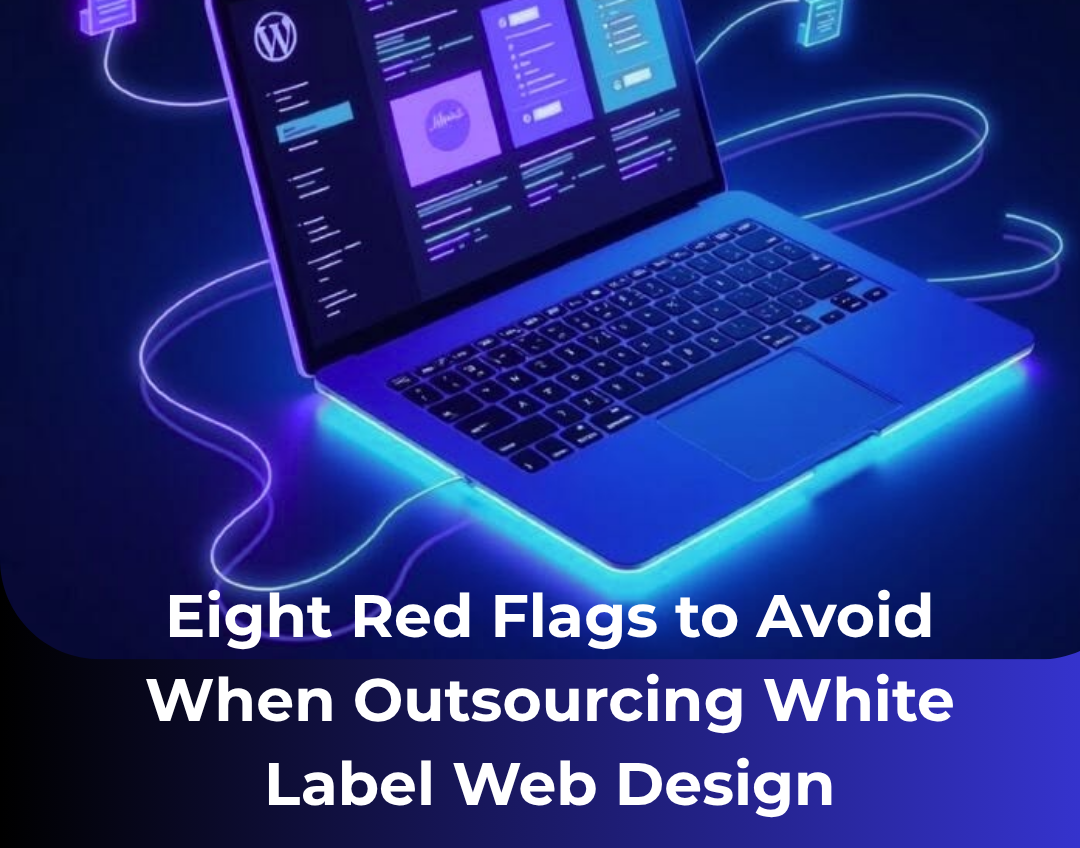
Sounds simple, outsourcing the web design: hire a partner, they design, you supply it under your name, you all win. But agencies with poor white-label experiences have had it all go differently: missed deadlines, work needing full revisions, and partners going silent during the project.
The good news is that most outsourcing problems are predictable. There are clear warning signs if you know where to look. Understanding the Red Flags to Avoid Outsourcing White Label Web Design before signing a partnership can help you avoid costly mistakes, protect your reputation, and choose a reliable partner from the start.
Why Choosing the Right White Label Partner Matters
When you outsource web design under your brand, your reputation is attached to the outcome. Your client doesn’t know about the partner; they know about you. Every missed deadline, poor-quality website, or communication gap reflects on your agency, not the team working behind the scenes.
That’s why understanding the Red Flags to Avoid Outsourcing White Label Web Design is essential for every growing agency. The right white-label partner supports your growth, delivers consistent quality, and helps strengthen client relationships. The wrong partner can quietly damage your reputation and cost you future business.
Red Flag 1: No Transparent Process
A reliable white-label web agency should clearly explain how a project moves from brief to delivery, how revisions are handled, how updates are communicated, and what happens when something unexpected comes up.
Vague answers at the sales stage become chaotic projects at the delivery stage. What you want is a partner with documented workflows: brief intake, build, QA, and handoff. Ask them to walk you through a recent project from start to finish. How they answer tells you everything about how they actually operate.
Red Flag 2: Unclear Ownership and Branding Terms
White-label web design services exist so your agency can present the work as your own. But not every partner makes this clear in their terms. Some retain partial rights. Others quietly embed their branding in footers or source files.
Before starting work, confirm in writing:
- Who owns the completed files, code, and design assets?
- Will any partner branding appear anywhere the client might see?
- Are all reports and documents delivered with your branding?
- Can you modify and transfer the work freely after delivery?
A proper white-label website design partner hands over clean, fully branded work, no strings attached.
Red Flag 3: No Verifiable Portfolio or Case Studies
It’s easy to claim expertise. It’s much harder to prove it. One of the biggest red flag of outsourcing white label web design is choosing a partner without reviewing their previous work. Before trusting any white-label web design reseller with your client’s projects, ask to see real examples.
A good portfolio shows variety in design, complexity, and industry. If a partner cites confidentiality, that’s sometimes fair, but ask for anonymized examples or a recent staging link. A partner that does quality work will find a way to demonstrate it. If they can’t show you anything convincing, there’s no reliable basis to trust them with your client’s project.
Red Flag 4: Communication Gaps and Slow Response Times
You’re in the middle. Your client expects updates from you, and your white-label partner is the one doing the work. If they’re slow to respond or go quiet mid-project, you end up guessing at progress.
What good communication looks like with a white-label web design agency:
- A dedicated point of contact
- Agreed response time expectations
- Regular check-ins at defined milestones
- Willingness to work in your preferred tools
Test their responsiveness during the evaluation stage; how quickly they reply to your questions is a preview of how they’ll behave once a project is live.
Red Flag 5: Pricing That Seems Too Low to Be Real
Competitive pricing is one of the main reasons agencies turn to white-label website development. But when pricing is dramatically below what quality work actually requires, ask why.
Usually, it means less experienced teams, corners cut on testing and mobile optimization, or a low headline rate that balloons through revision fees and add-ons. None of these outcomes saves money. A project requiring extensive fixes costs more in time and client confidence than the initial savings were worth.
A good white-label web development agency offers pricing that’s realistic and transparent, not just designed to win your business.
Red Flag 6: No Quality Assurance Step
A white-label web development agency that sends work straight from the developer to your inbox without internal review hasn’t thought carefully about what they’re delivering.
QA catches the broken mobile layout, the form that doesn’t submit, and the oversized image, slowing the page down. Ask specifically how QA is handled. A serious white-label web agency has a structured checklist covering cross-browser testing, mobile responsiveness, page speed, form functionality, and visual accuracy. If QA is described as something the developer handles themselves, that’s not a real process.
Red Flag 7: Rigid Packages That Don’t Fit Real Projects
Real projects don’t fit predetermined boxes. One client needs a five-page brochure site; another needs a complex build with custom functionality and integrations. A partner offering only fixed tiers of white-label website design services will leave you either overpromising or underdelivering.
White-label web design services worth using can scope work based on a real brief, not a template. That flexibility matters especially for agencies working across different industries and client types.
Red Flag 8: No Track Record With Agencies Specifically
There’s a real difference between a studio that builds sites for direct clients and one that operates as a white-label web agency. The first is used to be the face of the project. The second understands their job is to stay invisible and support an agency that is.
When evaluating white-label web design services, ask what percentage of their work is white-label versus direct. Ask if they have experience with agencies in your space. A partner that genuinely understands the agency model handles communication, confidentiality, and branded delivery differently from the start, and that difference shows up throughout every project.
How 360 White Label Agency Approaches Web Design
At360 White Label Agency, we understand the red flags of outsourcing white label web design because we’ve built our process to eliminate them. Every project follows a defined workflow, from discovery and development to internal QA and fully branded delivery, ensuring your client commitments are met with confidence.
Our white-label web development services are built for agencies that need reliable technical execution without growing an in-house team. We also support agencies with white-label SEO, local SEO, social media marketing, and graphic design services, all under your agency’s name.
f you’re looking to avoid red flags of outsourcing white label web design, our proven process offers transparency, consistent communication, and dependable results. With over 450 completed projects for U.S. agencies and a 4.8 client satisfaction rating, you can review our process, request portfolio examples, and receive transparent pricing before making a decision.
Conclusion
Outsourcing white label web design is one of the most practical ways to scale your agency without scaling your headcount. But it only works with the right partner.
The eight red flags here aren’t edge cases; they come up regularly, and they tend to surface at the worst moments: mid-project, just before a client deadline, after promises are already made. Doing your due diligence upfront protects your client relationships, your margins, and your reputation.
Look for a white-label web design agency with a transparent process, verified portfolio, clear ownership terms, honest pricing, structured QA, and genuine experience in the agency model. A partner that checks all of those boxes won’t just complete your projects; they’ll help your agency grow.
Get in touch with 360 White Label Agency to talk through what that partnership looks like in practice.
Frequently Asked Questions
1. What is white-label web design?
White-label web design is when a development team builds websites on behalf of an agency, delivering the finished work under that agency’s brand. The end client interacts only with the agency.
2. How is white-label web development different from regular outsourcing?
In regular outsourcing, the client may know about the third-party team. In white-label web development, the partner operates entirely in the background, and all work is branded as the agency’s own.
3. What should a white-label web design reseller look for in a partner?
Documented processes, a verifiable portfolio, clear ownership terms, honest pricing, structured QA, flexible scoping, and a track record working with agencies rather than direct clients.
4. How do I know if a white-label web agency is genuinely experienced?
Ask for examples, ask them to explain their QA process, and ask how they handle revision requests and timeline slippage. Experienced partners give clear answers; unreliable ones give vague ones.
5. Can I use a white-label web development agency for ongoing maintenance?
Yes. Most white-label web agencies offer ongoing support beyond the initial build. Confirm this upfront, since most client relationships involve continued work rather than one-off projects.
6. Is white-label website design legal?
Yes. White-label arrangements are standard business practice across marketing, software, and web services. Agencies routinely use white-label partners to expand their service offerings.
7. How do I protect my agency if a white-label project goes wrong?
Have a written agreement covering ownership, revision limits, timelines, communication expectations, and missed deadline remedies. A reliable white-label web design agency will have no issue agreeing to these terms in writing.