What happens when your agency wins a new client, and your design team is already at capacity? Most agency owners face this exact problem the moment growth kicks in. You need more creative output, but hiring a full-time designer takes months and costs more than most retainers can justify. That is where white label graphic …

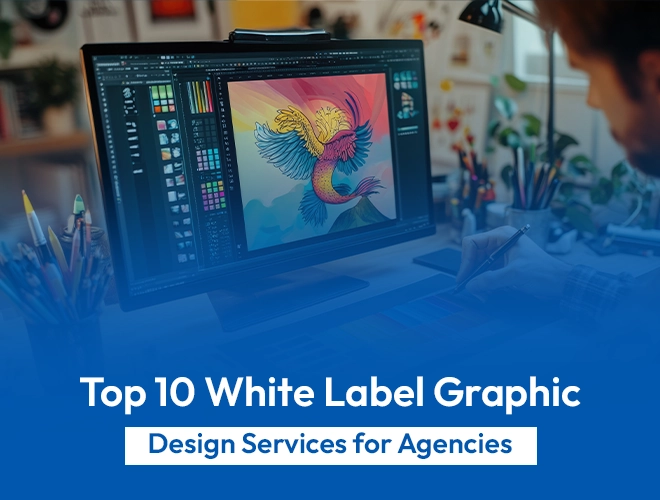
What happens when your agency wins a new client, and your design team is already at capacity? Most agency owners face this exact problem the moment growth kicks in. You need more creative output, but hiring a full-time designer takes months and costs more than most retainers can justify. That is where white label graphic design services change the math.
White label graphic design lets your agency deliver polished, on-brand creative work under your own name, without building an in-house team. The right partner handles production. You keep the client relationship and the margin.
This guide compares the top 10 white label graphic design services available to agencies in 2026. Each provider is reviewed on pricing, turnaround time, revision policy, and the specific agency use case it fits best. Whether you are expanding your service line, managing overflow, or building a fully outsourced creative operation, this list gives you what you need to shortlist the right partner and move fast.
Quick Comparison: Top 10 White Label Graphic Design Services (2026)
Scan this table first, then read the full breakdown for the providers that match your agency’s needs.
| Provider | Starting Price | Turnaround | Revisions | Best For |
| 360 White Label | Custom retainer | 24–48 hrs | Unlimited | Full-service agency partners wanting one backend vendor |
| ManyPixels | From $699/mo | 1–2 days | Unlimited | Multi-client agencies needing broad scope at low cost |
| Design Pickle | From $1,918/mo | 1–2 days | Unlimited | High-volume teams needing structured daily production |
| Kimp | From $1,397/mo | 1–2 days | Unlimited | Content agencies needing graphic + video in one plan |
| Superside | Custom (~$5,000+/mo) | 12–36 hrs | Per plan | Enterprise agencies with complex, multi-channel briefs |
| Penji | From $499/mo | 24–48 hrs | Unlimited | Growing agencies on a tight budget |
| White Label IQ | Custom | Project-based | Per project | Dev + design agencies outsourcing both disciplines |
| Designity | From $5,995/mo | 24 hrs (minor) | Unlimited | Agencies needing US-based team + creative director |
| Monkyvision | Custom retainer | Project-based | Per project | Agencies prioritising premium quality over speed |
| Vendasta | Custom platform fee | Platform-based | N/A (template-driven) | Marketing platform resellers building multi-service stack |
What Is White Label Graphic Design?
White label graphic design is when an external design team creates work that your agency delivers to clients under your own brand. Your clients never know a third party was involved. From their side, every logo, social graphic, ad banner, or brand asset came directly from you.
The key difference between white label design and freelancing is structure. A white label graphic design agency works within your workflow, follows your client’s brand guidelines, and signs NDAs to keep the arrangement private. You maintain full ownership of the client relationship and all the revenue that comes with it. The provider stays invisible. That is the model.
Why Agencies Are Switching to White Label Graphic Design
Growing agencies hit the same wall: sales outpace production. Taking on new clients without more design capacity means slower turnaround, dropped quality, or burnout on your team. White label graphic design solves that without the overhead of in-house hiring.
Here is what agencies actually report gaining from it:
• Scalable capacity without hiring delays: You can take on new retainers immediately instead of waiting weeks to recruit and onboard a designer.
• Broader service offering: One white label partner typically covers social media graphics, branding, ads, presentations, and web visuals not just one specialisation.
• Predictable costs over fixed salaries: Subscription-based design services turn a fixed payroll cost into a flexible monthly expense you can scale up or down.
• Better client retention: Consistent, on-time delivery builds trust. Clients who see reliable creative output stay longer.
According to a 2024 Databox report on agency profitability, agencies that outsource production functions report up to 30% higher margins than those relying entirely on in-house teams. The model works because it turns creative production into an operational system rather than a staffing problem.
How We Evaluated These Providers
Every provider on this list was assessed on five criteria that directly affect how a white label arrangement works in practice for an agency:
• Pricing transparency: Is pricing publicly listed, or do you need a sales call to get a number? Public pricing helps agencies budget predictably.
• Turnaround time: For agency retainers, 24 to 48 hours is the benchmark. Slower providers create friction with your clients.
• Revision policy: Unlimited revisions are now standard in this space. Providers with capped revisions create unexpected cost exposure.
• White label readiness: Does the provider actually operate as a white label partner? This means NDA agreements, agency-branded deliverables, and a workflow that keeps the provider invisible to your clients. Not every service advertised as white label delivers on this.
• Scalability: Can the provider handle two clients or twenty? The best partners grow alongside your agency without requiring a new vendor search.
Top 10 White Label Graphic Design Services for Agencies in 2026
1. 360 White Label Agency
360 White Label Agency is built from the ground up for agency resellers. Unlike standalone design platforms, it operates as a full-service white label agency partner covering graphic design alongside SEO, content writing, and digital marketing. For agencies that want to outsource multiple service lines through one trusted backend rather than juggling several vendors, this is the model that makes that possible.
Their design workflow is NDA-protected by default. All deliverables are branded to your agency. Your clients never see 360’s name. Turnaround on standard marketing assets runs 24 to 48 hours, and revision requests are handled without caps or extra charges. Agency scalability is built into how they operate, which means whether you have five clients or fifty, the workflow adapts rather than breaking.
This is the strongest choice for agencies building a long-term outsourcing strategy across more than one service category. If you want a single back-end partner your agency can grow with, rather than a one-off design subscription, 360 White Label Agency is the starting point worth prioritising.
Pro: Multi-service model covers design, SEO, and content, fewer vendors, cleaner operations.
Con: Pricing is not publicly listed. You need to book a consultation to get a quote, which adds a step before you can compare costs directly.
Best for: Agencies looking for a full-stack white label backend across design and digital marketing services.
2. ManyPixels
ManyPixels is one of the most widely used subscription-based design services among agencies in 2026. They hire the top 2% of applicants, which keeps quality consistent across a large client base. Their Advanced plan at $699 per month covers a broad scope including logos, branding, social graphics, web design, illustrations, and motion graphics, all under one subscription.
For agencies managing five or more client retainers, ManyPixels offers a strong quality-to-cost ratio. Designers are assigned based on skill match rather than just availability, which matters for brand consistency across clients with different visual identities. Project management is included, and the platform handles brief submission, feedback, and file delivery in one place. ManyPixels also lets you pause your subscription for $10 per month rather than cancelling, which is a meaningful advantage for agencies with seasonal client loads.
Pro: Wide scope including motion graphics; transparent public pricing; pause option for agencies with fluctuating demand.
Con: No dedicated white label portal or agency-branded deliverables. The provider’s name may appear in file metadata unless you handle stripping manually.
Best for: Multi-client agencies needing broad creative scope at a predictable monthly cost.
3. Design Pickle
Design Pickle is one of the most established names in unlimited graphic design. In mid-2025 they changed their pricing model significantly: they moved from flat-fee unlimited plans to a creative hours billing system. Under the current structure, you purchase daily creative hours rather than an unlimited seat. Platform access is billed separately at $119 to $299 per month, making the effective entry cost around $1,918 per month when combined.
For agencies, the process-first approach still has merit. Design Pickle’s workflow is built around structured brief submission, predictable daily output, and Canva file delivery so clients can make minor edits themselves. It suits agencies with high volumes of repeatable marketing assets rather than complex or exploratory creative work. The new pricing model is more expensive than many alternatives at the entry level, which is an important factor to weigh against your agency’s design volume.
Pro: Proven, process-driven workflow for repeatable assets; Canva delivery simplifies client handoffs.
Con: New hours-based billing model raised the effective entry price to $1,918/month, significantly higher than most competitors in this category.
Best for: Agencies with high-volume, repeatable design needs across marketing campaigns who can justify the higher cost.
4. Kimp
Kimp’s main differentiator is the combined graphic design and video subscription. For agencies running social media retainers, clients increasingly expect both static creatives and short-form video content. Kimp covers both under one plan without requiring a separate video production vendor. Their Graphics + Video plan at $1,697 per month is one of the few subscription services in this space that handles motion alongside static design.
Their team structure gives you one project manager and three designers who specialise in different asset types. Requests are fulfilled based on which designer is best suited for the job, not just who is next in the queue. Kimp also offers a 7-day free trial before any payment, which makes testing the workflow straightforward for agencies that want to validate quality before committing.
Pro: Only provider in this category offering graphic and video design as a combined subscription at a flat monthly rate.
Con: At $1,397 per month for graphics only, the cost is higher than ManyPixels and Penji without a meaningfully broader graphic design scope.
Best for: Content and social media agencies that need both graphic and video creative under one subscription.
5. Superside
Superside operates at the premium end of the creative outsourcing market. It functions more like an embedded enterprise creative department than a traditional design subscription. Beyond standard graphic design, their offering includes 3D and AR design, AI-enhanced creative production, and strategic concept development. For agencies managing large, complex accounts with premium client budgets, this is the tier that delivers without compromise.
Turnaround at Superside is genuinely fast. Most asset types are delivered in 12 to 36 hours, with dedicated creative teams and structured project management included. The tradeoff is cost. Pricing is custom and typically starts above $5,000 per month, which puts it out of reach for most small to mid-size agencies. This is a provider built for enterprise creative needs, not for agencies trying to manage design costs.
Pro: Fastest turnaround in this category; 3D, AR, and AI-enhanced creative for clients with premium production needs.
Con: Pricing is custom and starts high, not a realistic option for agencies billing below enterprise rates.
Best for: Enterprise-level agencies managing complex, multi-channel accounts where premium creative speed and quality justify a higher investment.
6. Penji
Penji is the most affordable entry point in this list with a dedicated designer model. The Starter plan at $499 per month assigns you a single dedicated designer who works your account consistently rather than pulling from a rotating pool. For agencies where visual identity consistency across a client’s account matters, this approach reduces the rework that comes from briefing a new designer each time.
Penji’s scope covers marketing graphics, social media, ads, branding, and basic web design. All plans come with a 30-day money-back guarantee, which is more generous than the 7-day trials most competitors offer. The limitation at the Starter tier is throughput, one dedicated designer means you are capped at their individual output speed. Agencies with high design volume will need to upgrade to the Agency plan at $1,497 per month to access two designers.
Pro: Most affordable dedicated-designer model in this category; 30-day money-back guarantee reduces commitment risk.
Con: Single designer on the Starter plan limits output speed; not ideal for agencies managing heavy volume across multiple clients.
Best for: Growing agencies on a budget that need consistent, dedicated designer support without a large monthly commitment.
7. White Label IQ
White Label IQ is one of the few providers in this space that combines graphic design with web development outsourcing under a single white label contract. For agencies that sell both design and development services to clients, this removes a vendor from the equation and keeps handoffs clean. Their team works directly inside your project management tools rather than requiring you to adapt to their own platform.
They operate as a genuine white label partner in the fullest sense. Client-facing materials come out branded to your agency, the provider stays invisible, and their workflow is built around agency operational needs rather than end-client direct purchasing. The downside is that project-based pricing makes budgeting less predictable than a subscription, which matters for agencies trying to manage monthly margins tightly.
Pro: True white label workflow with full agency branding; rare combination of design and development under one contract.
Con: Project-based pricing makes costs harder to forecast month to month compared to subscription alternatives.
Best for: Web design and development agencies looking for a single white label partner that covers both disciplines.
8. Designity
Designity’s standout feature is the dedicated Creative Director model. Every plan includes a Creative Director who oversees all work before delivery, not just a designer executing briefs. This layer of strategic oversight is uncommon in the subscription design space and is genuinely useful for agencies whose clients have sophisticated brand standards or ongoing campaign strategy needs.
Pricing starts at $5,995 per month for the Plus plan, which includes 120 dedicated hours, two active creatives, and 24-hour turnaround on minor requests. A 2-week trial is available with no upfront payment. At this price point, Designity is designed for agencies billing premium rates to large clients; it is not priced for smaller or growing agency operations. If creative director oversight is something your clients actually need, the investment is justifiable. If it is not, you are paying for a feature that does not improve your margins.
Pro: Dedicated Creative Director on every account the strongest quality oversight structure in this category.
Con: Starts at $5,995 per month, making it the most expensive option on this list by a significant margin.
Best for: Agencies serving clients who need brand strategy and creative direction alongside execution, not just design output.
9. Monkyvision
Monkyvision positions itself as a premium white label creative partner for agencies that prioritise brand consistency over speed or volume. Their model is built around long-term agency relationships and dedicated team structures rather than the task-queue approach used by most subscription providers. NDA-protected delivery and agency-branded workflows are core to how they operate, which makes them a genuine white label graphic design agency rather than a subscription service with a white label option bolted on.
Pricing is not publicly listed and requires a consultation. Turnaround is project-based, which makes Monkyvision a poor fit for agencies that need rapid, predictable asset delivery on a daily basis. Where they are a strong fit is for agencies managing premium client accounts where visual quality and consistency take precedence over quick output cycles.
Pro: Strong white label infrastructure with NDA workflows and a dedicated team focus on brand consistency.
Con: No public pricing and project-based turnaround make this unsuitable for agencies with high-frequency or time-sensitive design needs.
Best for: Agencies that prioritise premium creative quality and long-term brand consistency over volume or speed.
10. Vendasta
Vendasta is a different kind of option. It is not a standalone design service it is a full marketing reseller platform that includes white label graphic design as one component of a broader product suite. Agencies using Vendasta can resell website design, digital advertising, SEO, and social media management alongside design services, all under their own brand within a single client-facing platform.
For agencies whose primary need is graphic design production, Vendasta is more platform than required. But for agencies building a scalable reseller operation across multiple digital marketing services, the platform model consolidates vendor management significantly and provides a white label client portal out of the box. The complexity of onboarding and the platform fee structure means you need a clear plan for how design fits within a broader multi-service offering before committing.
Pro: Full white label platform with CRM, marketing automation, and multi-service reselling under one roof.
Con: Overkill for agencies whose primary need is design; platform complexity requires investment of time and money to onboard properly.
Best for: Marketing platform resellers building a full multi-service digital agency offering that goes beyond graphic design alone.
How to Choose the Right White Label Graphic Design Partner
Before you start shortlisting providers, answer four questions about where your agency actually is right now:
• What is your monthly design volume? If you are handling more than 15 to 20 design requests per month across clients, a subscription model (ManyPixels, Penji, Kimp) will save you more than project-based pricing. If your volume is lower or project-specific, a custom retainer gives you flexibility without paying for unused capacity.
• Do you actually need a true white label workflow? Not every service marketed as white label delivers under your agency’s brand. Before signing, confirm the provider offers signed NDA agreements, agency-branded file delivery, and a workflow that keeps their identity invisible to your clients. Several providers on this list do not include this by default.
• How important is turnaround speed to your clients? If your clients expect next-day asset delivery, prioritise providers with 24 to 48 hour SLAs: ManyPixels, Penji, and Design Pickle all operate in that window. If your clients work on weekly approval cycles, turnaround speed matters less than quality and consistency.
• Are you outsourcing design only, or multiple services? If your agency plans to outsource SEO, content, and design through one partner, a full-service white label agency like 360 White Label Agency reduces vendor complexity and protects your margins better than managing separate point solutions. [Internal link: ‘outsourcing SEO, content, and design through one partner’ → 360 White Label Agency services or How It Works page]
Full Comparison: White Label Graphic Design Services (2026)
| Provider | Starting Price | White Label Ready? | What Makes It Stand Out |
| 360 White Label | Custom | Yes — fully | Multi-service white label model (design, SEO, content) under one roof with NDA workflows |
| ManyPixels | $699/mo | Partial (no portal) | Top 2% designer hiring; widest scope including motion graphics and video editing |
| Design Pickle | $1,918/mo | No dedicated portal | Switched to hours-based billing in 2025; structured daily production with Canva delivery |
| Kimp | $1,397/mo | No dedicated portal | Only provider with combined graphic + video design subscription at a flat monthly rate |
| Superside | ~$5,000+/mo custom | No dedicated portal | Enterprise-grade 3D, AR, and AI-enhanced creative; fastest turnaround in this category |
| Penji | $499/mo | Partial (white-label delivery included) | Most affordable dedicated-designer model; 30-day money-back guarantee |
| White Label IQ | Custom | Yes — fully | Rare provider combining design + web development under a single white label contract |
| Designity | $5,995/mo | No dedicated portal | Every plan includes a dedicated Creative Director; US-based creative team only |
| Monkyvision | Custom | Yes — NDA-protected | Long-term partnership model; prioritises brand consistency over speed or volume |
| Vendasta | Custom platform fee | Yes — platform-level | Full reseller platform with CRM, marketing automation, and multi-service white label stack |
Final Thoughts: Which White Label Graphic Design Service Is Right for Your Agency?
The white label graphic design market in 2026 gives agencies more options than ever, ranging from $499-per-month subscription services to enterprise creative departments billing above $5,000 per month. The right choice depends on three things: your monthly design volume, your clients’ quality expectations, and whether you want a standalone design vendor or a full-service backend partner.
For agencies managing multiple client retainers on a tight budget, ManyPixels and Penji offer the strongest cost-to-output ratio. For agencies with enterprise clients who need strategic creative oversight, Designity or Superside are the relevant options. For agencies building a scalable outsourcing operation across design, SEO, and content, a multi-service partner like 360 White Label Agency removes the complexity of managing several vendors and keeps your margins cleaner.
The biggest risk is not picking the wrong provider. It is waiting too long to decide while your in-house team stays at capacity and new business sits untouched.
Ready to scale your agency’s creative output without the overhead? Book a free consultation at 360whitelabelagency.com and find the white label design setup that fits your agency’s growth plan.
Frequently Asked Questions
What is the difference between a white label graphic design service and hiring a freelancer?
A freelancer is an independent contractor with no structural guarantee of availability, turnaround consistency, or NDA coverage. A white label graphic design agency runs structured workflows, delivers work under your brand, signs confidentiality agreements, and operates with predictable timelines. The reliability and operational structure are fundamentally different, and that difference matters at scale.
How much does white label graphic design cost in 2026?
Subscription-based services start at $499 per month (Penji Starter) and scale up to $8,995 per month (Designity Premium). Most mid-size agencies using subscription providers spend between $699 and $1,918 per month. Enterprise providers like Superside and Designity are custom-priced and typically start above $5,000 per month. Project-based and custom retainer pricing varies and requires a direct consultation to quote.
Can I pause or cancel my white label design subscription?
Most subscription-based providers allow pausing or cancellation. ManyPixels lets you pause for $10 per month with your project history intact — one of the best pause policies in this category. Kimp operates month-to-month with no long-term contracts. Design Pickle offers refunds within the first 14 days on quarterly and annual plans. Always confirm the pause and cancellation terms before you sign, especially if your agency has seasonal client patterns.
What types of design work can white label services handle?
Most providers cover social media graphics, display ads, marketing banners, presentations, logos, brand identity assets, and basic web design. Premium providers like Superside extend into 3D, AR, and AI-enhanced design. Kimp is the only subscription provider in this list that includes video editing as part of their standard graphic design plans. Motion graphics are available through ManyPixels and Designity. If you need web development alongside design, White Label IQ covers both.
How do I write a clear brief for a white label design partner?
A clear brief includes the asset type and dimensions, your client’s brand guidelines (logo files, colour hex codes, fonts), the goal of the asset, the target audience, and at least one example of an output style the client approves of. Most white label providers accept briefs through their own project management portal. The more specific your brief, the faster and more accurate the first draft will be which directly reduces revision rounds and keeps your agency’s delivery timeline on track.
How do I protect my clients’ confidentiality when using a white label design partner?
The right white label partner signs an NDA before any work begins. This agreement covers your client details, brand assets, project information, and the existence of the outsourcing arrangement itself. Before onboarding any provider, confirm they will sign a non-disclosure agreement as standard practice. Providers like 360 White Label Agency, White Label IQ, and Monkyvision all operate with NDA-protected workflows as a core part of their model, not as an optional add-on. For providers that do not offer this, walk away.