You’ve just delivered great SEO results to your clients. Their rankings are climbing. Organic traffic is rising. But when you send the report, the client is silent. The real issue here isn’t in your performance but in your report. The key to retaining clients lies in effective reporting. White-label SEO reports are the backbone of …

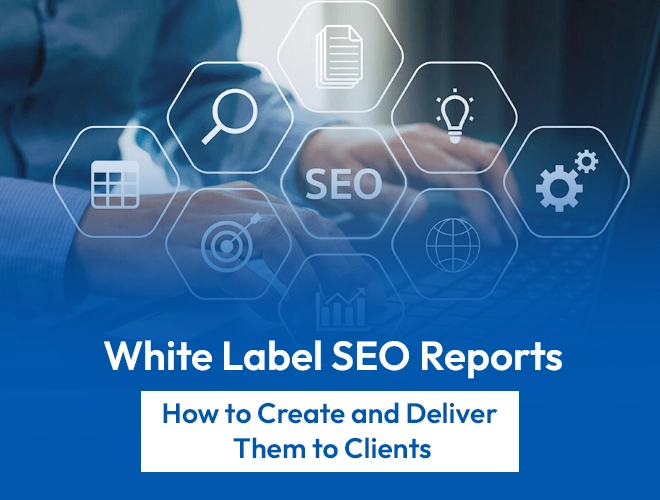
You’ve just delivered great SEO results to your clients. Their rankings are climbing. Organic traffic is rising. But when you send the report, the client is silent. The real issue here isn’t in your performance but in your report.
The key to retaining clients lies in effective reporting. White-label SEO reports are the backbone of client communication for SEO agencies, digital marketing agencies, and freelance SEO consultants. Done right, they are a powerful communication tool; done wrong, they are ignored and archived.
What Is White Label SEO Reporting?
Before getting into the how, it helps to be clear on the what because the terminology gets thrown around loosely.
What Is White Label SEO?
White-label SEO means taking a product or service and delivering it under your own brand. A white-label provider does all the work for you and provides tools. The agency presents everything under its own logo, colors, and company name. No service provider name will be shown to your clients.
If you are a marketing agency using Semrush and Ahrefs, but the client only sees your branding, that’s white-label SEO. The client doesn’t really know what tools are behind the scenes.
What Is a White Label SEO Report and Why Does It Matter?
A white-label SEO report is a client-facing document fully branded with your agency’s identity. No third-party logos, no generic templates, no software watermarks. It presents keyword rankings, organic traffic, backlinks, and technical SEO.
Reporting is the primary touchpoint every single month. A well-constructed report tells a growth story and explains what comes next. White-label SEO reporting software like AgencyAnalytics lets you produce branded reports at scale.
Who Uses White Label SEO Reports?
White-label SEO reports are used by:
- SEO agencies
- Digital marketing agencies
- White-label resellers
- Freelance SEO consultants
- Account managers
They need to present SEO data in a non-technical, business-friendly format.
Why Most White Label SEO Reports Get Ignored?
Most reports don’t fail because the SEO strategy is bad. They fail because the report itself is built for the wrong audience, in the wrong format, with the wrong focus. Here are the three patterns that kill engagement every time.
The Data Dump Problem
Exports from Semrush, Ahrefs, or Moz give pages of keyword tables and crawl errors. A client running a dental practice finds none of it useful. A 40-page PDF gets skimmed or deleted entirely.
The Branding Problem
A report with a Semrush logo or a generic AgencyAnalytics watermark signals low effort. Clients wonder why they need you. White labeling is non-negotiable: your logo, colors, and domain only.
Misaligned Metrics (Reporting SEO Numbers, Not Business Outcomes)
Leading with Domain Authority or crawl errors without connecting to revenue confuses clients. Clicks don’t pay salaries. Conversions do. The best white-label SEO reports connect to phone calls, form submissions, and ROI.
What a White Label SEO Report Should Include?
Lead With Business KPIs, Not Vanity SEO Metrics
Answer “Is our investment working?” first. Lead with organic traffic growth, leads generated, conversion rate, and revenue from organic. Reframe from “what happened with your website” to “what happened with your business.”
Keyword Rankings and Organic Visibility
Show how target keywords perform in Google Search. Include movement up/down, top-ranking pages, and significant gains or losses. Tools like SE Ranking, Mangools, and BrightLocal pull clean rank tracking data.
Organic Traffic Performance
Pull data from Google Analytics and Google Search Console. Show organic sessions, clicks, impressions, and CTR month-over-month. Call out which pages are gaining or declining traction.
Backlink Profile and Domain Authority
Cover total referring domains, new backlinks acquired, Domain Authority (Moz), Domain Rating (Ahrefs), and Trust Flow (Majestic). Flag any toxic links needing disavowal.
Technical SEO and Site Health
A white-label SEO audit report surfaces crawl errors, broken links, XML sitemap issues, robots.txt problems, duplicate meta tags, missing schema markup, and redirect chains. Keep this summary-level for clients.
Website Performance (Core Web Vitals, Page Speed, Mobile Usability)
Core Web Vitals (LCP, CLS, INP) belong in every white-label website performance report. Add page speed scores and mobile usability status from Google Search Console.
Local Rankings (For Local SEO Clients)
A local ranking report white-label section is essential for local businesses. Show Google Local Pack performance, Google Business Profile impressions, and key local search positions. BrightLocal is purpose-built for this.
Conversion Rates and Goal Completions
Pull conversion data from Google Analytics form completions, phone calls, and e-commerce purchases. Showing 47 leads from organic traffic is far more persuasive than 12% more impressions.
Actionable Insights and Next Steps
End with specific, prioritized actions. “Fix 23 broken internal links” is the next step. “Continue optimizing content” is not. This differentiates trust-building reports from activity logs.
What to Stop Including?
Stop burying clients in full keyword tables with hundreds of rows, lengthy crawl logs, and raw backlink exports. These belong in appendices, not the main client-facing report. Less is almost always more.
Key Features to Look for in a White Label SEO Reporting Tool
Custom Branding and White Label Customization Options
A good white-label SEO reporting tool must let you upload your logo, apply custom colors, set a custom domain, and remove all third-party branding. AgencyAnalytics, DashThis, Whatagraph, SE Ranking, and Reportz offer varying levels.
Automated and Scheduled Report Delivery
Manual reporting doesn’t scale. The best white-label SEO reporting software lets you set up automated monthly or weekly delivery. Reports go out without anyone on your team touching them.
Integration With Google Search Console, Google Analytics, and Other Tools
Your tool must pull live data from Google Search Console and Google Analytics. Better platforms also integrate with Ahrefs, Semrush, Moz, Majestic, HubSpot, and Google Looker Studio via API.
Live Client-Facing Dashboards
Static PDF reports are one format. Live dashboards let clients log in anytime for real-time performance. A good white-label website report tool supports both formats.
AI and LLM Visibility Data
As Google’s AI Overviews become more prominent, forward-thinking agencies track client visibility in AI-generated answers. Including this data positions your agency ahead of the curve.
PDF Export and Embeddable Report Options
White-label reports should be exportable as clean PDFs for email delivery. They should also be embeddable in client portals or shareable via secure links.
How to Create a White Label SEO Report? (Step-by-Step)
Here’s a practical, linear workflow for building a white-label SEO report that’s ready to send to clients.
Step 1: Define Your Client’s Goals and Select Relevant Metrics
Get clear on success for this specific client. E-commerce cares about revenue from organic. Local service cares about calls. SaaS cares about trial signups. Track metrics that reflect those goals.
Step 2: Create a Campaign and Connect Data Integrations (GSC, GA, and More)
Inside your white label seo audit tool, create a client campaign. Connect Google Search Console, Google Analytics, rank tracking, HubSpot, Ahrefs, Semrush, and BrightLocal as needed.
Step 3: Run an SEO Audit and Set the Keyword Ranking Baseline
Run a full white-label SEO audit using SE Ranking, Raven Tools, or Semrush. Document crawl errors, broken links, Core Web Vitals, mobile usability, meta tags, robots.txt, XML sitemap, and schema markup.
Step 4: Structure the Report Around Business Outcomes
Structure content around client business goals before adding visuals. Lead with KPIs, follow with channel performance, surface technical findings, and close with next steps.
Step 5: Customize With Your Agency’s Branding, Visuals, and Commentary
Apply your logo, brand colors, and typography. Add data visualization charts. Write brief human commentary explaining what each metric means and why it matters.
Step 6: Publish to the Client-Facing Dashboard and Schedule Automated Delivery
Publish to the client’s branded dashboard. Schedule automated delivery from your agency domain, not a generic platform address. Data updates automatically from that point forward.
How to Automate White Label SEO Reporting and Cut Production Time
Once your reporting workflow is set up, the goal is to get monthly report production down to 30 minutes or less per client. Here’s how the best agencies do it.
Automate the Data, Write Only the Commentary
Automate all data collection from Google Search Console, Google Analytics, Ahrefs, and others. The only manual work should be written commentary, a short paragraph per section explaining what changed and what comes next.
Use the 1-Page PDF and Loom Format for Client Delivery.
Use a tight 1-page PDF covering only the highest-level KPIs: traffic, rankings movement, conversions, and one key win. Pair with a 3-5 minute Loom video walkthrough. Most clients watch a 4-minute video but ignore a 20-page PDF.
Retrain Client Attention Over Time
If clients are used to data dumps, switch formats gradually. Add an executive summary first. Gradually reduce technical depth, replacing raw data with summary callouts. After 2-3 cycles, most prefer the leaner format.
Benefits of White Label SEO Reports for Agencies
For agencies that haven’t formalized their reporting workflow yet, the ROI on getting this right is significant.
Strengthens Your Agency Brand and Reputation
Every report is a brand impression. Professionally designed, consistently branded documents reinforce that your agency is competent and worth the retainer. Strong reporting becomes competitive differentiation.
Builds Client Trust and Retention
Transparent, consistent reporting drives client retention. When clients see exactly what’s happening each month in language they understand, they’re far less likely to churn. The report becomes a trust-building mechanism.
Saves Time and Scales Your Reporting Workflow
Manual reporting is one of the most time-consuming agency activities. Automated white-label SEO reporting software eliminates mechanical tasks. Producing a branded report in under 30 minutes per client means scaling to 100 clients becomes a systems problem.
Common Mistakes to Avoid When Creating White Label SEO Reports
Even agencies with good intentions make these errors regularly.
Overloading Clients With Data (Data Dump)
A 40-page report with every metric signals you haven’t identified what matters. If a metric doesn’t connect to a client goal, it doesn’t belong in the main report. Trim ruthlessly.
Poor Visual Presentation and Inconsistent Branding
Inconsistent fonts, mismatched colors, and third-party logos undermine your professional impression. Invest in a clean, consistent white label template. Use data visualization to clarify, not decorate.
Tracking Outdated or Irrelevant Metrics
Standalone Domain Authority, raw backlink counts, and meta keyword counts have limited relevance. Track Core Web Vitals, CTR from Google Search Console, and conversion performance from organic.
Missing Recommendations, Reporting Without Direction
Reporting without direction is an expensive summary. Every report must close with specific, prioritized recommendations tied to the data. Clients need to see that you know what to do with the data.
Start Building White Label SEO Reports Clients Actually Open
A well-built white-label SEO report proves your value, reinforces your brand, and keeps clients aligned with the strategy. None of that requires a 40-page data dump. It requires structure, clarity, and a report built for the person reading it.
Audit your current reports against this framework. Pick a white label SEO reporting tool that fits your workflow. Set up automation and get your first properly structured report out the door. Your clients will notice the difference. And so will your retention numbers.
For agencies looking to streamline reporting and scale client delivery, 360 White Label Agency offers white-label digital marketing solutions designed to support growing businesses and agencies.
Frequently Asked Questions
What Is a White Label SEO Report?
A white-label SEO report is a client-facing document fully branded with your agency’s identity logo, colors, and domain with no visible third-party branding. It includes keyword rankings, organic traffic, backlink metrics, technical health, and conversion performance.
What Should a White Label SEO Report Include?
A strong report includes business KPIs, keyword rankings, organic traffic from Google Analytics and Google Search Console, backlink profile, technical SEO summary, Core Web Vitals, local rankings, conversion rates, and actionable next steps.
Which Tools Are Best for White Label SEO Reporting?
Widely used tools include AgencyAnalytics, SE Ranking, DashThis, Whatagraph, Reportz, and Raven Tools. For local SEO clients, BrightLocal offers excellent local ranking report white-label functionality.
Can I Automate White Label SEO Report Delivery?
Yes. Most dedicated white-label SEO reporting software supports automated report scheduling. Configure the template, connect integrations, set delivery cadence, and branded reports are sent automatically to clients.
Should I Include AI and LLM Visibility Data in Client Reports?
Increasingly, yes. As AI-generated answers capture more clicks, tracking whether client content appears in AI Overviews is becoming a meaningful performance indicator. Forward-thinking agencies already build this into reporting.
How Do I Create a White Label Local Ranking Report?
Use BrightLocal. Set up rank tracking for target local keywords, connect Google Business Profile data, and configure the report template with your agency branding. Cover local pack rankings, GBP impressions, clicks, calls, direction requests, and review data.